If you’ve ever stood over a drooping fiddle leaf fig wondering what you did wrong, this article is for you. As a decor writer, I get asked one question more than almost any other: “Are fake plants tacky, or are they actually a smart choice?” So I went looking for real answers – market reports, consumer surveys, veterinary data and peer-reviewed studies – instead of opinions.
My short answer: today’s artificial plants are one of the easiest, most budget-friendly ways to make a home feel calm, green and finished. Below I’ll walk you through why they’re taking off, the advantages they have over living plants, the few honest drawbacks, and my top 10 picks for every taste.
Faux plants are no longer a niche – the numbers prove it
Artificial greenery has quietly become a serious decor category. According to Persistence Market Research, the global artificial plants and flowers market is expected to reach US$3.5 billion in 2025 and grow to US$5.6 billion by 2032, a growth rate of 6.8% a year. The same report puts residential use at about 40% of the market, so a big share of that demand is coming from ordinary homes, not just hotels and offices.
Other analysts see the same trend. Market Research Future projects the artificial plants industry to grow from US$3.36 billion in 2025 to US$5.5 billion by 2035, naming rising urbanization and growing awareness of allergies among the key drivers. (Market estimates vary between research firms, but they all point in the same direction: up.)
Shopping habits are shifting too: Persistence Market Research expects online sales of decorative artificial plants to grow by around 20% in 2025, which makes sense – it has never been easier to order a 6-foot olive tree to your door.
Why so many of us are switching: real plants are harder than they look
Here’s the part nobody puts on the plant-shop label. Keeping houseplants alive is genuinely difficult for busy people:
- In a 2021 survey reported by Statista, the largest group of non-expert gardeners – 37% – said they kill one to two indoor plants every year.
- A Miracle-Gro survey of 2,000 adults, summarized by DIY Garden, found that almost half had killed an average of five houseplants.
- Among Gen Z plant owners, 69% had at least one houseplant die during the pandemic, according to a 1,250-person survey by Trees.com.
- A UK survey by Harveys Furniture, covered by the Yorkshire Evening Post, found that over a third of people kill their plants within three months, more than 50% forget to water them, and over 30% say they simply don’t have time.
The main culprits? Overwatering is the top cause of plant deaths (50%), followed by not enough sunlight (30%), according to Miracle-Gro data cited by DIY Garden. In other words: the dark hallway, the north-facing bedroom and the bathroom with no window are exactly where we want greenery most – and exactly where living plants struggle.
7 advantages of artificial plants over living ones
1. Zero maintenance, zero guilt
No watering schedules, no fertilizer, no repotting, no plant-sitter when you travel. A faux plant looks exactly the same in December as it did the day you unboxed it. After reading the survey numbers above, I think this is the single biggest reason for the boom.
2. They go where real plants can’t
Windowless bathrooms, dim corners, a shelf right above the radiator, an office with no natural light – a faux plant doesn’t care. This gives you total design freedom: you place greenery where it looks best, not where the light happens to be. A faux plant in a dark corner looks even better next to a warm lamp; my lighting cheat sheet helps you pick the bulb.
3. Safer for curious cats and dogs
This one surprised me. According to Dr. Tina Wismer of the ASPCA Animal Poison Control Center, quoted by dvm360, plant ingestion made up 5.4% of the more than 199,000 calls the center received in 2017 – more than 10,700 calls, or around 29 a day. Some of the most popular houseplants, including pothos (devil’s ivy) and dumb cane, are on the ASPCA’s list of plants it most often gets calls about. A faux version gives you the same look without the toxic sap. (Do still keep small plastic parts away from pets that like to chew.)
4. No soggy soil, no mold, no fungus gnats
Overwatering doesn’t just rot roots – as Bob Vila explains, soggy soil is an open invitation for mold to move in. Mold allergies are fairly common, so for allergy-prone households, a plant with no soil at all is a real plus.
5. Often cheaper over time
A living plant isn’t a one-time purchase: there’s soil, fertilizer, pots, pest treatments – and replacements when it dies. Blooming Artificial estimated (reported by DIY Garden) that the total cost of a real 100 cm ficus could reach just under £70, while an artificial one came in just under £45.
6. You still get the feel-good effect of greenery
One of the most-cited studies in design psychology, Roger Ulrich’s 1984 paper in Science, found that surgical patients with a view of trees recovered faster, needed less pain medication and went home sooner than patients facing a brick wall (Nature Sacred). Importantly, later research summarized by The Nature of Cities suggests that substitutes for nature – paintings, photos, videos – can also be effective. Much of the calming effect of greenery comes from seeing it, which is exactly what a faux plant offers.
7. They’re realistic now – really
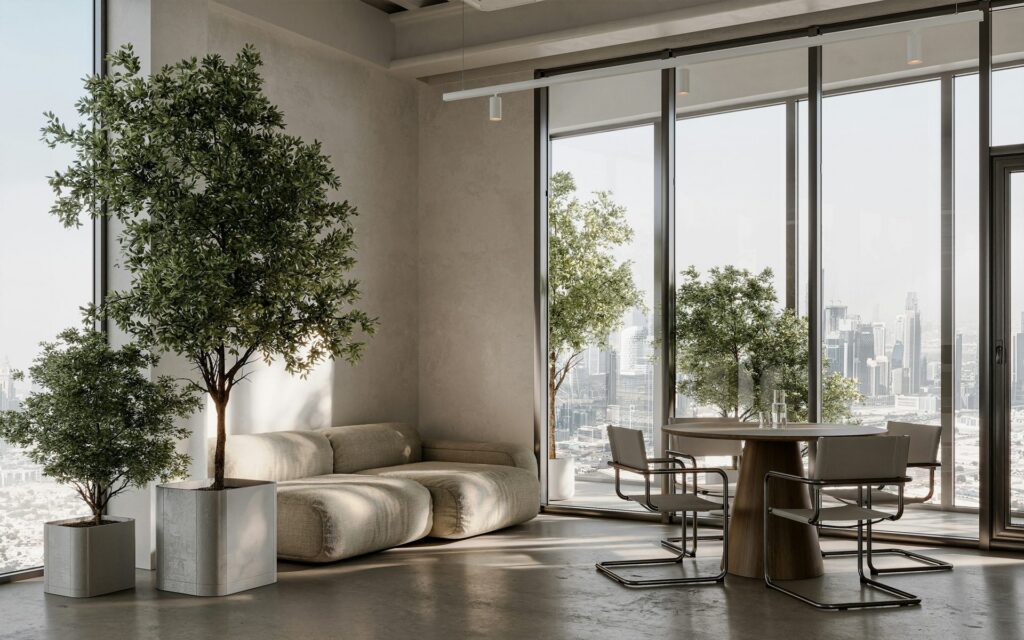
Forget the shiny, dusty plastic ferns of the ’90s. Modern faux plants use natural wood trunks, textured leaves, visible veining and even “fruit” (look at the olive tree in my list below). From a few steps away, the best ones are very hard to tell apart from the real thing. The same is true for faux florals; see why faux pampas grass is everywhere.
The myth worth busting: real plants don’t really “clean” your air
One argument I often hear against faux plants is that “real plants purify the air.” The research says that’s mostly a myth. A review by Drexel University researchers, published in the Journal of Exposure Science & Environmental Epidemiology, looked at 30 years of studies and found that normal ventilation removes indoor pollutants much faster than plants do. As Drexel explains, the famous 1989 NASA experiment was done in a sealed lab chamber, not a real home. By the researchers’ calculations, you’d need somewhere between 10 and 1,000 plants per square meter to match a building’s ventilation or a few open windows (Yahoo News).
So if air quality was your main reason for buying real plants, open a window – and choose the plants you’ll actually enjoy looking at.
The honest downsides (there are a few)
I promised you a balanced take, so here’s what to keep in mind:
- They collect dust. Plan to wipe or shake them out every few weeks. A soft brush or a hairdryer on the cool setting does the job in a minute.
- Direct sun can fade them. Cheaper models can lose color in a sunny window over time. Choose UV-resistant plants for bright spots or outdoor use.
- Quality varies a lot. The difference between a convincing faux tree and an obviously fake one is in the details – trunk texture, leaf variation, a natural-looking pot. When ordering online, my guide to reading AliExpress listings helps you spot the cheap-looking ones before they arrive.
- Plastic isn’t biodegradable. Industry analysts at Research and Markets note growing environmental scrutiny of non-biodegradable materials. My tip: buy fewer, better-quality pieces and keep them for years – a faux plant you use for a decade is a far better choice than living plants you replace every few months.
My top 10 artificial plants for every taste
I picked these to cover every style: romantic, Mediterranean, modern minimal, tropical and boho. Most come in several heights, so check the size options before you order. To see a tall faux plant styled in a real room, check my cozy beige and olive living room.
1. Pink Cherry Blossom Tree – for romantic, feminine spaces
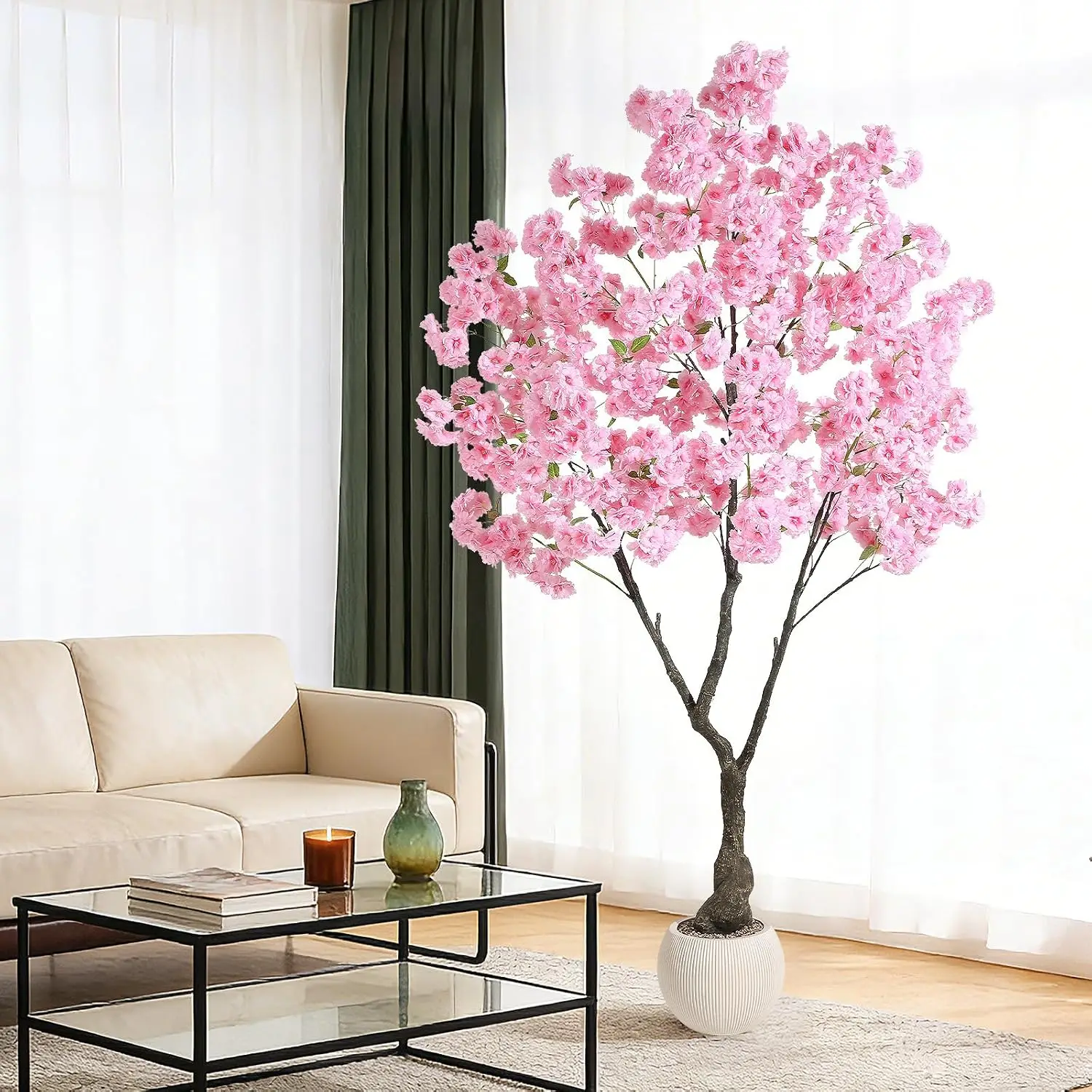
A soft pink statement tree in a clean white planter, with adjustable branches so you can shape it to your corner. It brings spring into a bedroom, living room or entryway all year long – and it’s a guaranteed conversation starter.
2. Faux Olive Tree – for Mediterranean and Japandi interiors
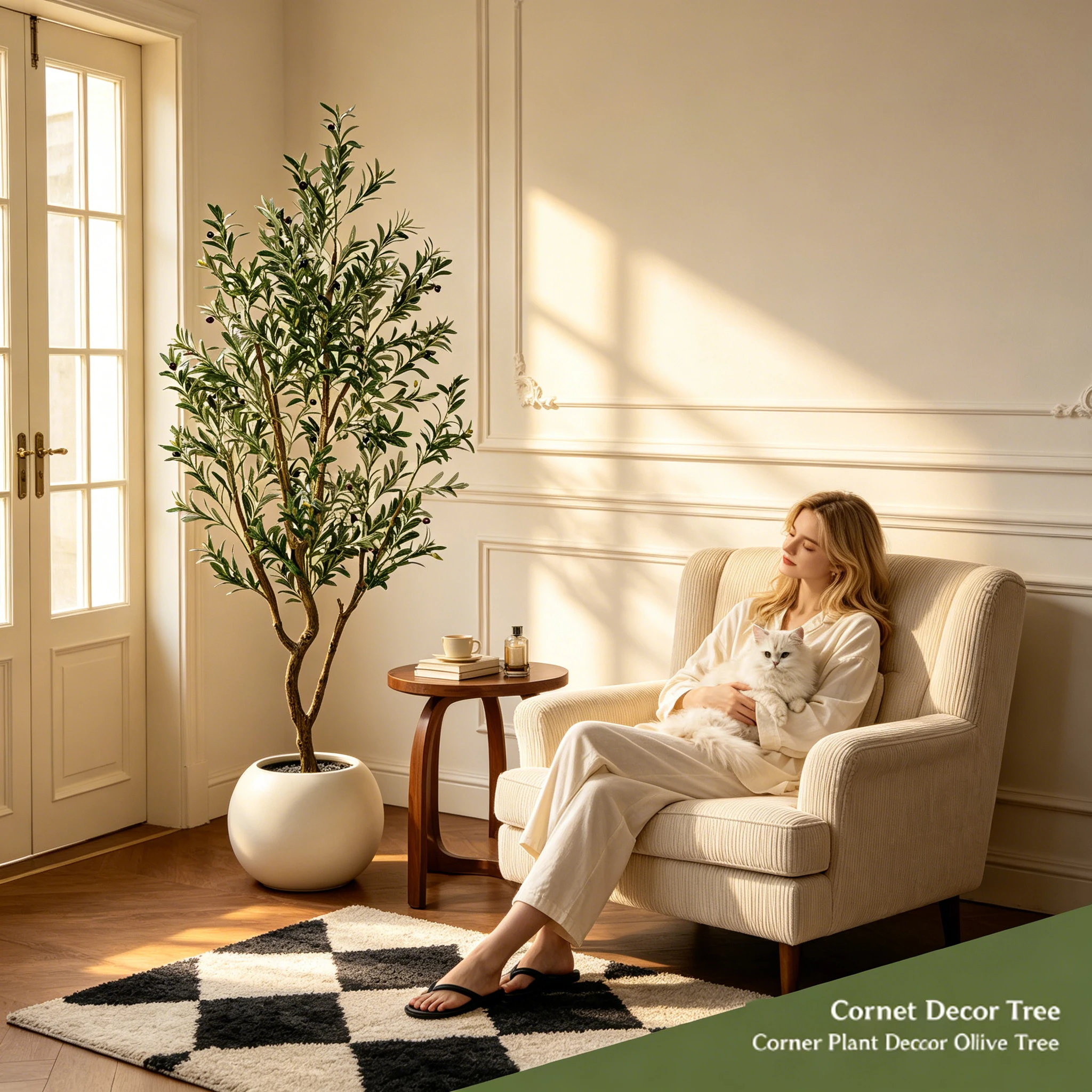
The olive tree is the designer favorite right now, and this one has a natural wood trunk and lifelike fruit. Available in about 5.25, 6.1 and 7.1 ft, with a sleek black pot that suits neutral, earthy rooms.
3. Fiddle Leaf Fig Tree – for modern living rooms

The fiddle leaf fig is famous for being one of the fussiest real houseplants – which makes it a perfect candidate for faux. Big, sculptural leaves; available in 5, 6 and 7 ft.
4. Tall Artificial Bamboo – for height and a zen feel
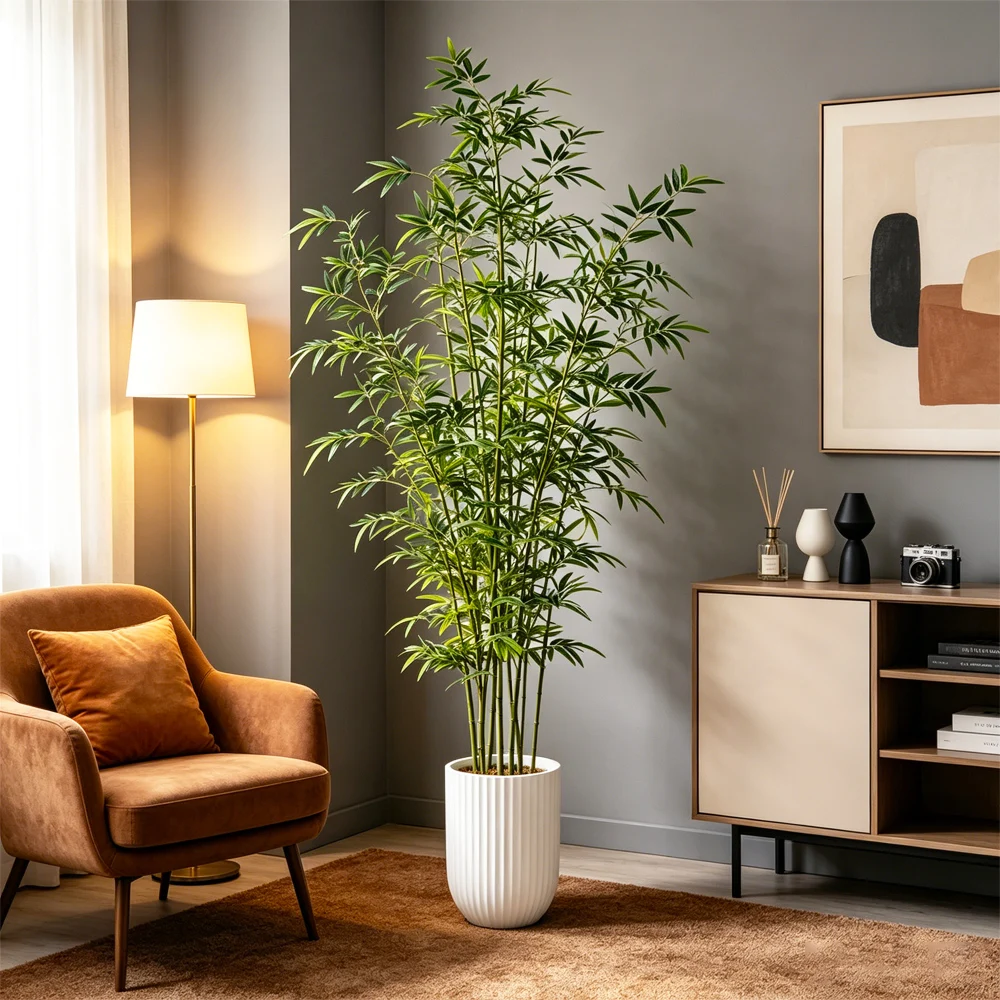
Slim, airy and tall (from about 160 to 270 cm), bamboo fills vertical space without crowding the room. Great for narrow corners, beside a TV unit or as a soft divider.
5. Monstera in a Tall White Planter – for tropical vibes
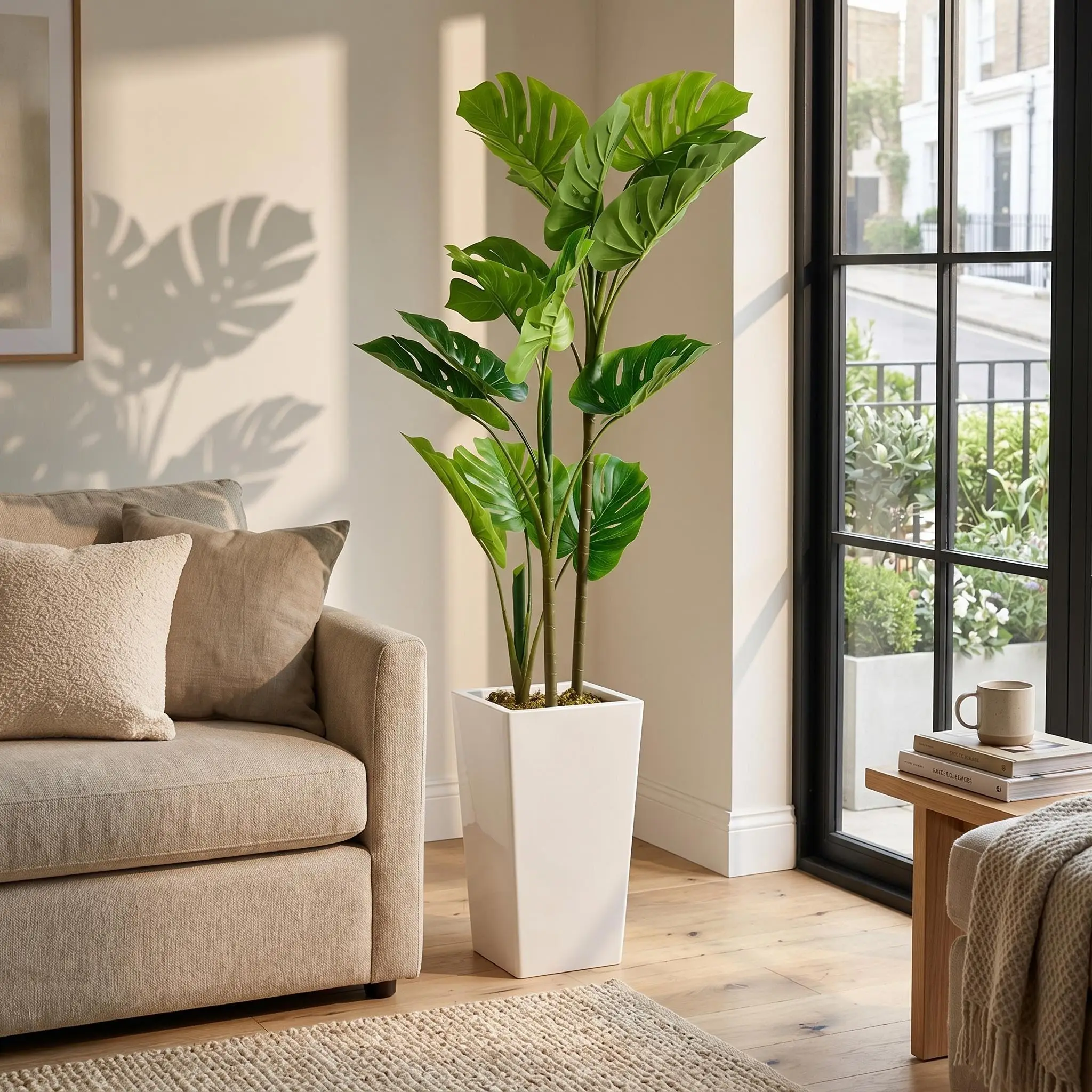
Those iconic split leaves instantly say “jungle chic.” At about 4.5 ft with a tall white planter, it’s ready to place – entryway, living room or home office.
6. Ficus (Banyan) Tree – the timeless classic

Full, dense foliage and a lifelike trunk make the ficus the safest pick for any style. Comes in 4, 5 and 6 ft – choose by ceiling height.
7. Dracaena Tree – for minimalist and office spaces
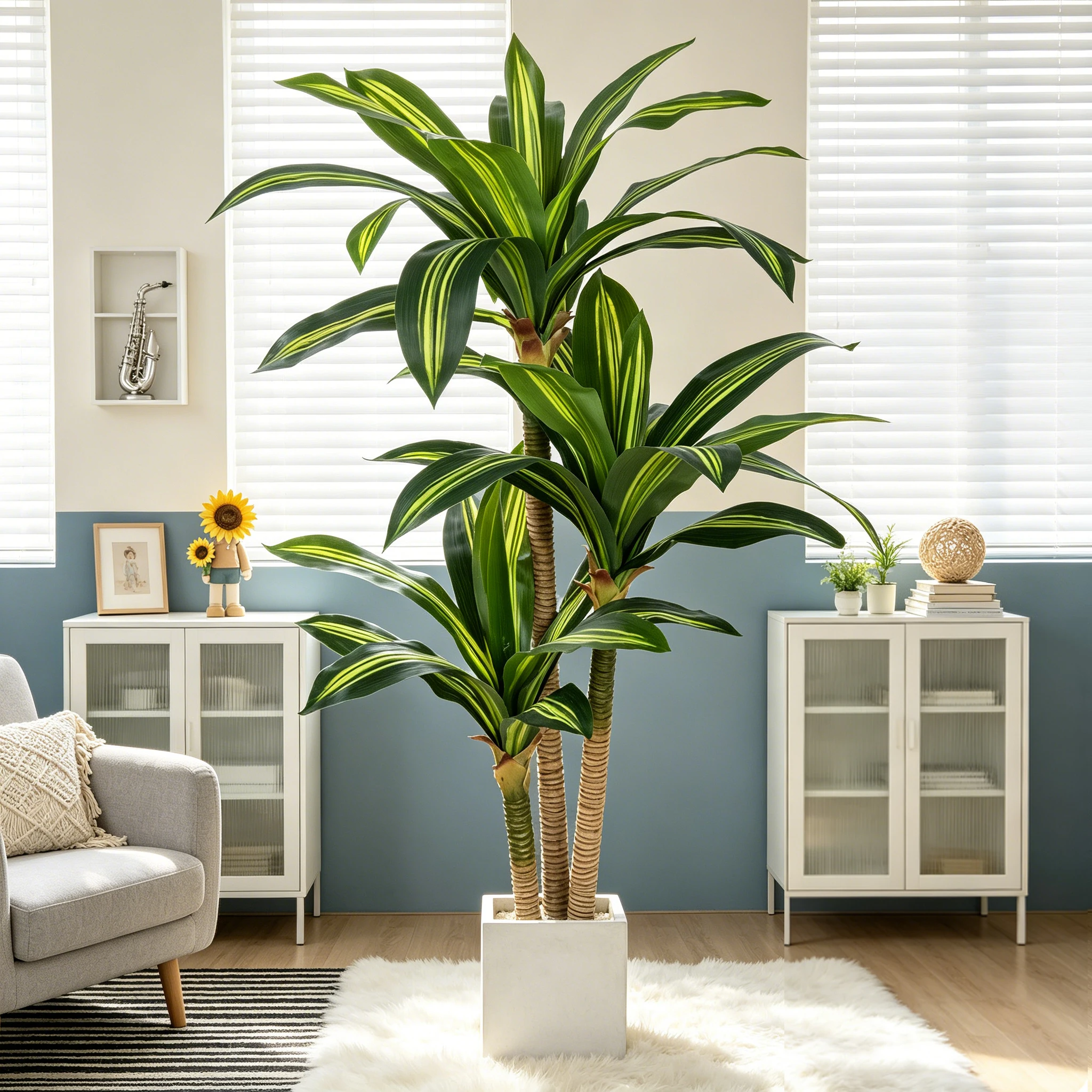
Clean, spiky leaves give dracaena a graphic, architectural look that works beautifully in minimalist rooms and offices. Easy assembly, 4–6 ft, and suitable for indoors or outdoors.
8. Lush 50-Inch Palm – for resort-style living
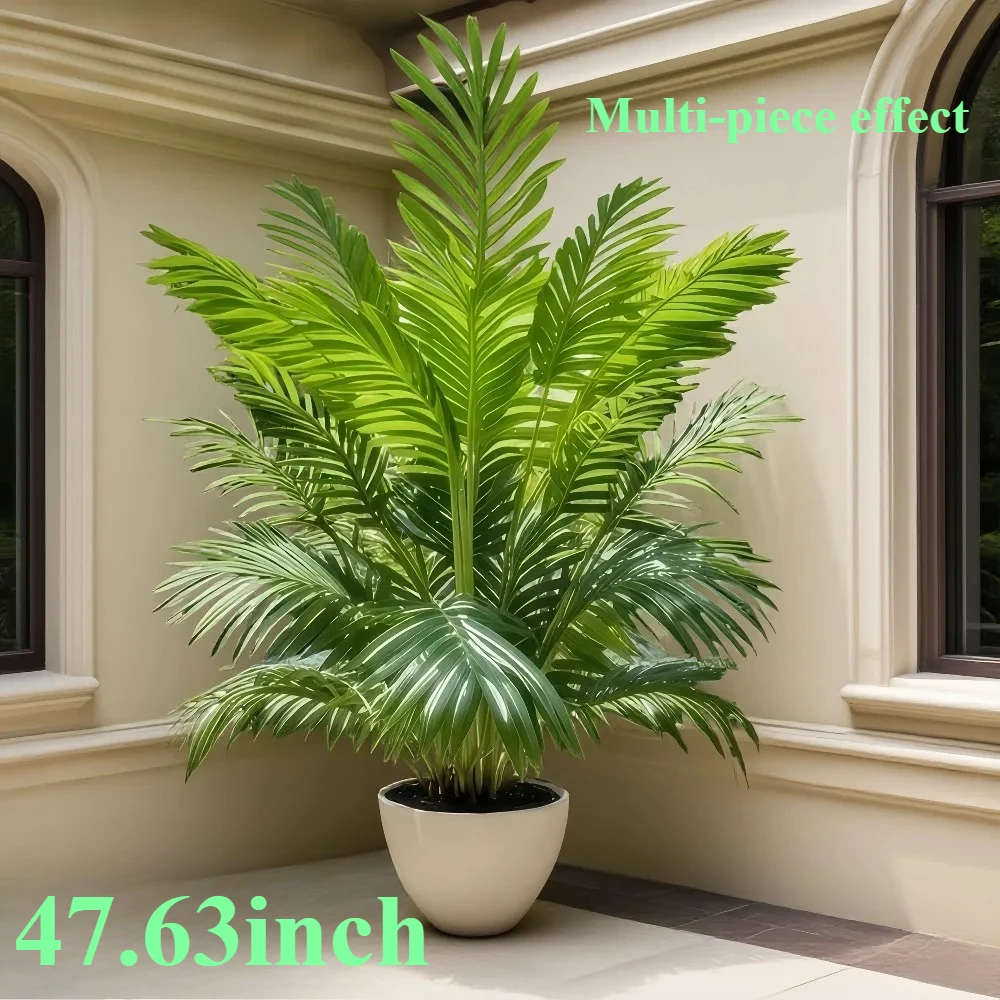
A full, generous palm that brings holiday energy to a living room, sunroom or balcony. Rated for indoor and outdoor use, all seasons.
9. Faux Banana Tree – for bold, maximalist rooms
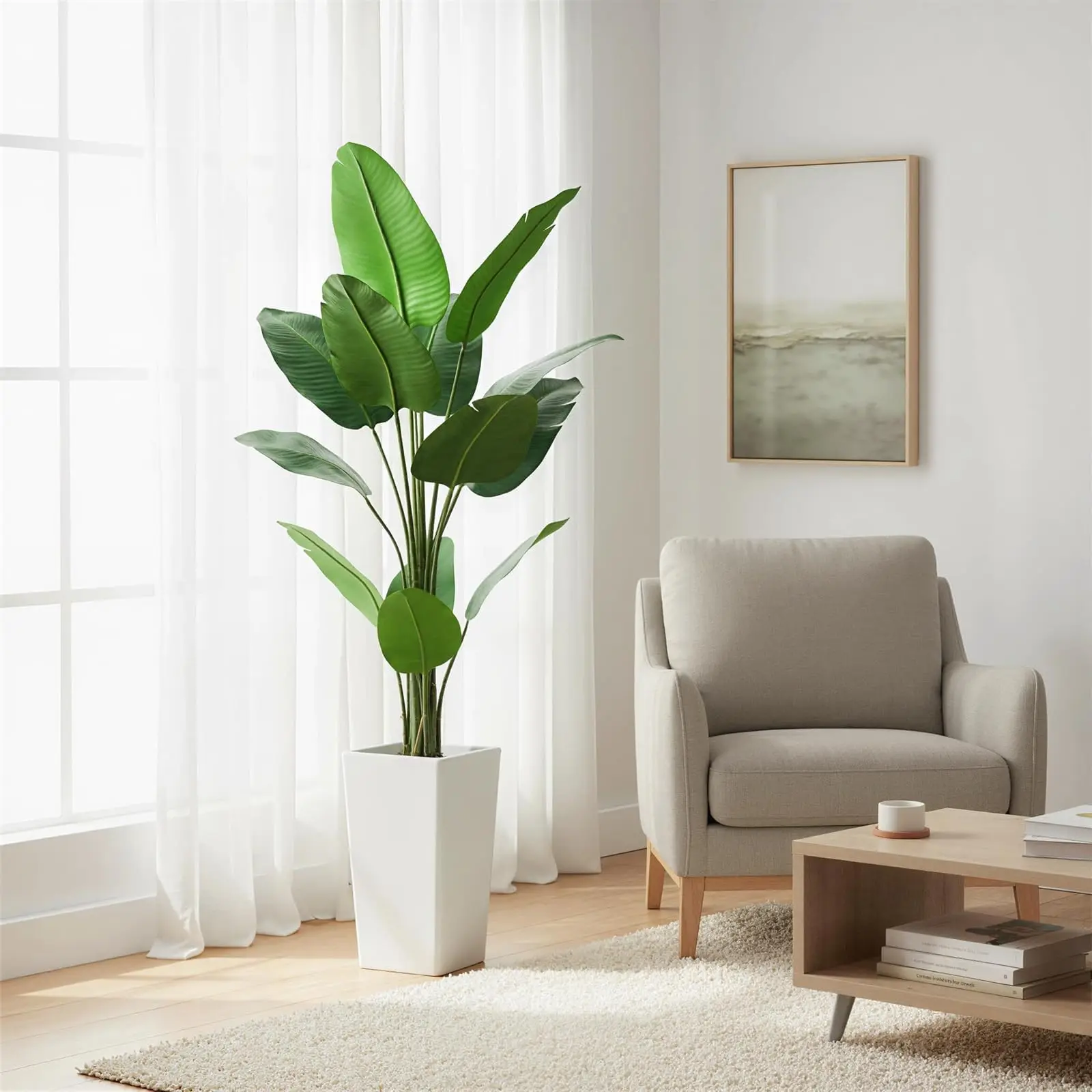
Oversized tropical leaves for anyone who loves a dramatic statement. About 4.8 ft and delivered in a tall white planter.
10. Compact Tropical Palm (43 in) – for small spaces and balconies
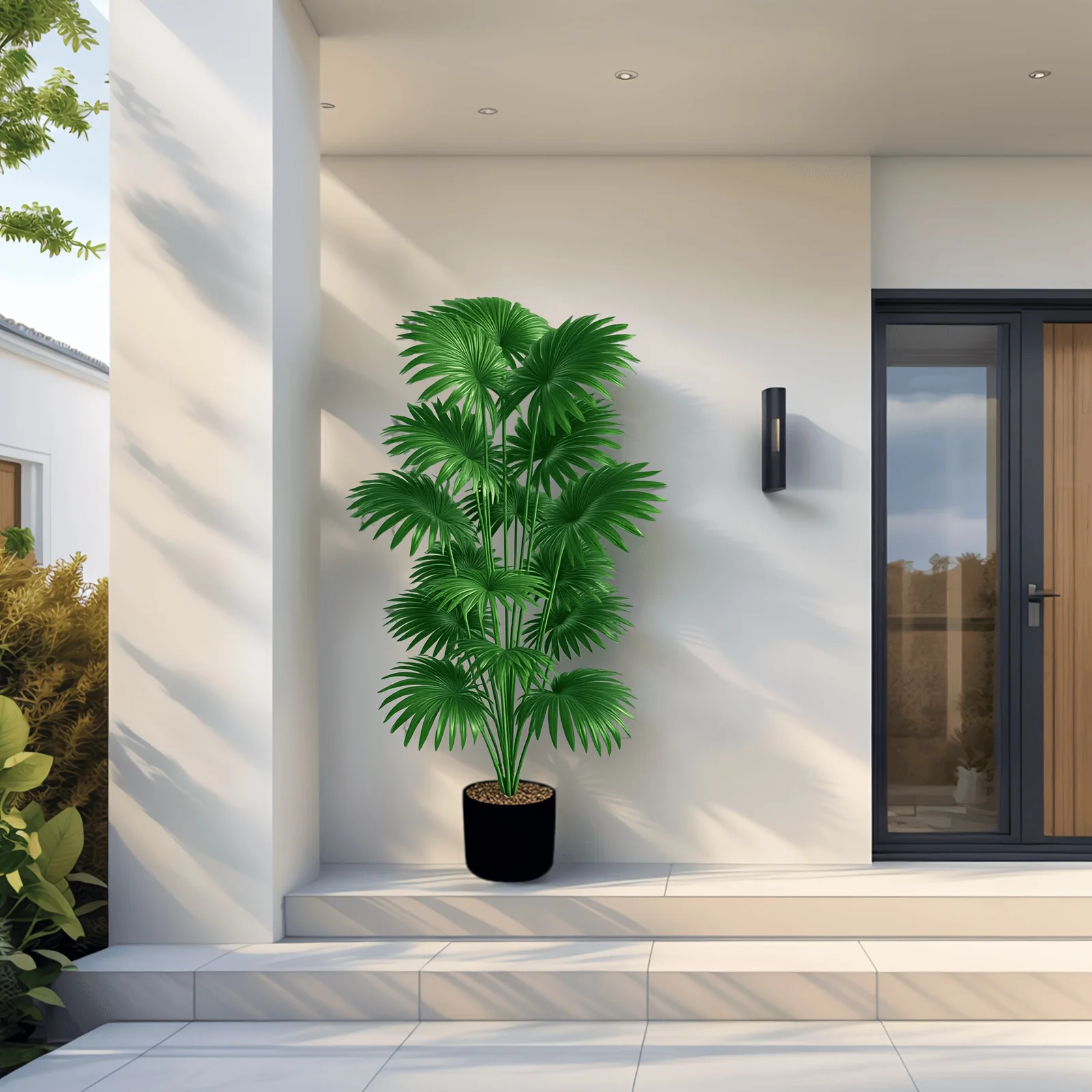
All the tropical charm at a smaller scale (about 43 inches) – ideal for apartments, a reading nook or a balcony, indoors or out.
My 4 quick tips for making faux plants look real
- Pot them properly. Swap a plain plastic base for a ceramic, rattan or concrete planter and cover the base with moss or decorative pebbles.
- Bend and fluff. Most faux trees arrive compressed – spend ten minutes shaping each branch so it looks natural and full.
- Place them where a real plant could live. Near (not in) a window, in a corner with soft light – it tricks the eye.
- Mix sizes. One tall floor tree plus one or two smaller plants looks far more natural than a single plant on its own.
The bottom line
After all my research, I’m convinced: artificial plants aren’t a compromise anymore – they’re a smart design choice. They’re safer for pets, free of soil and mold, cheaper over time and they stay beautiful in places real plants never could. Dust them now and then, pick quality pieces, and you’ll enjoy your greenery for years.
This post contains affiliate links. If you buy through them, I may earn a small commission at no extra cost to you.