Can I tell you a secret? For years my living room was “safe.” Beige sofa, gray throw, a print I bought because it matched the sofa. It looked fine. It just didn’t look like anyone lived there.
Then I fell down the Afrohemian rabbit hole: warm terracotta, bold geometric patterns, woven textures, art with a real face and a real story. It felt like the opposite of a showroom. It felt like a home.
The best part? You don’t need a renovation or a designer budget to get the look. In this post I’ll walk you through what Afrohemian style actually is, where it comes from, and the 5 pieces I picked that can change the whole mood of a living room, whatever your budget.
What is Afrohemian decor?
Afrohemian (or “Afro-boho”) is a mix of two worlds: African textiles, patterns and art, and the relaxed, collected, layered feel of bohemian style. Think mudcloth-inspired pillows, indigo and rust tones, woven baskets, rattan, sculptural pieces and bold portraits, all living together in a room that feels warm rather than staged.
It isn’t just me who’s obsessed. Pinterest named Afrohemian Decor one of its official trends for 2026 in its annual Pinterest Predicts report. It describes the trend as a fusion of African and bohemian styles, led by Boomers and Gen X. According to Axios, searches for “afrobohemian home decor” grew 220% between September 2024 and August 2025.
| Pinterest search | Growth |
|---|---|
| searches for “afrobohemian home decor” | +220% |
| searches for “motif berbere” (Berber motifs) | +210% |
| searches for “adire fabric” | +130% |
| searches for “bamboo beaded curtains” | +60% |
Source: Pinterest Predicts 2026, year-over-year growth in Pinterest searches.
My take: Trends come and go, but this one feels different to me. It’s built on centuries-old craft traditions, not on a color someone picked for a catalog. That’s why I think it will age much better than most “it” styles.
Where does the style come from?
The “bohemian” half
The word “bohemian” took on its modern meaning in 19th-century Paris, where it came to describe the free, creative, often broke lives of artists. According to Encyclopaedia Britannica, writer Henri Murger helped spread the idea when he began publishing stories in 1845 about a community of struggling artists in the Latin Quarter. The decor style we call “boho” today keeps that spirit: collected rather than matched, personal rather than perfect.
The African half
The patterns and textures you’ll see in Afrohemian rooms are inspired by real textile traditions, each with its own history:
- Mudcloth (bògòlanfini), Mali. The name literally means “mud cloth.” According to The Metropolitan Museum of Art, “bogolan” means something made using mud and “fini” means cloth. The GW Textile Museum notes that after Mali’s independence in 1960 it was eventually adopted as the national cloth.
- Adire, Nigeria. An indigo-dyed cloth traditionally made by Yoruba women in southwestern Nigeria, using several resist-dye techniques to create its patterns (V&A Museum).
- Berber motifs, North Africa. The diamonds, zigzags and lines you see on Moroccan-style rugs and kilims, which Pinterest tracked as one of the fastest-growing searches in the trend.
- Natural fibers. Woven baskets, rattan, bamboo and raffia bring texture and that handmade warmth.
A little honesty from me: the budget pieces below are inspired by these traditions. They’re not handmade heritage textiles. When your budget allows, I love adding one authentic piece made by African artisans, like a real mudcloth throw or a hand-woven basket. It adds soul to the room and supports the makers behind the style.
The key elements of an Afrohemian living room
- A warm, earthy palette. Terracotta, rust, ochre, mustard, chocolate brown and cream, with indigo or deep teal as an accent. See how these warm tones fit the living room color trends for 2027.
- Pattern with meaning. Geometric, mudcloth-style and kilim patterns, mixed in different scales. A vintage-style rug is the easiest way to bring it in.
- Texture, texture, texture. Woven, quilted, fringed and carved pieces all layered together. Fluffy faux pampas grass adds one more soft layer.
- Art with presence. Portraits, abstract African-inspired prints and sculptural figures.
- A calm base. A neutral sofa and walls so the patterns can shine without the room feeling chaotic.
My budget rule: don’t replace your furniture. Keep the big pieces (sofa, coffee table, shelves) and change the layers: textiles, wall art, one rug and one or two statement objects. That’s where 80% of the style lives.
I picked 5 decor pieces for any budget that will turn your room into an Afrohemian living room
I went through a lot of options to find pieces that look much more expensive than they are and work together as a set. Here they are, in the order I’d add them to a room:
1. Geometric Afro-boho throw pillow covers
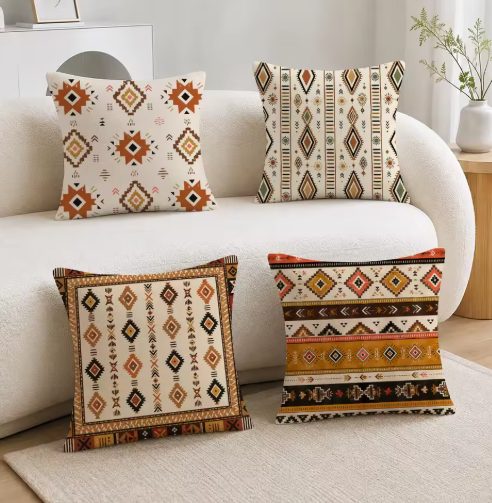
If you only buy one thing, make it these. Pillows are the fastest, cheapest way to change a room’s whole personality. These four covers mix diamond and kilim-style patterns in exactly the terracotta, ochre and cream palette the style is built on, and they’re designed to be mixed, so you don’t have to worry about matching.
Styling tip: put them on a plain cream or white sofa, like in the photo. The neutral base lets the patterns pop without looking busy.
2. African-inspired abstract wall art set
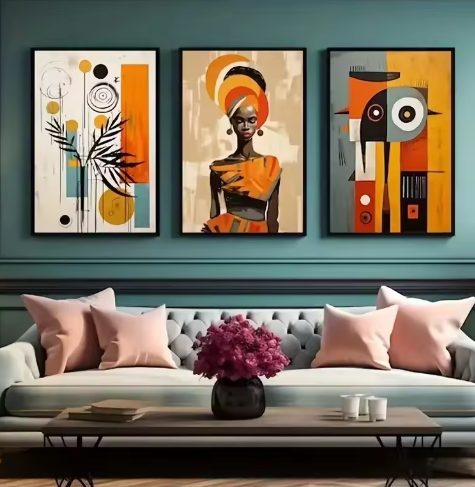
A blank wall is the biggest missed opportunity in most living rooms. This trio of prints combines a portrait, botanical shapes and a playful abstract bird, all in warm orange and mustard tones. As a set of three, it fills the space above a sofa with zero guesswork.
Styling tip: hang the set so the bottom edges sit about 8 to 10 inches above the sofa back, with the same small gap between each frame.
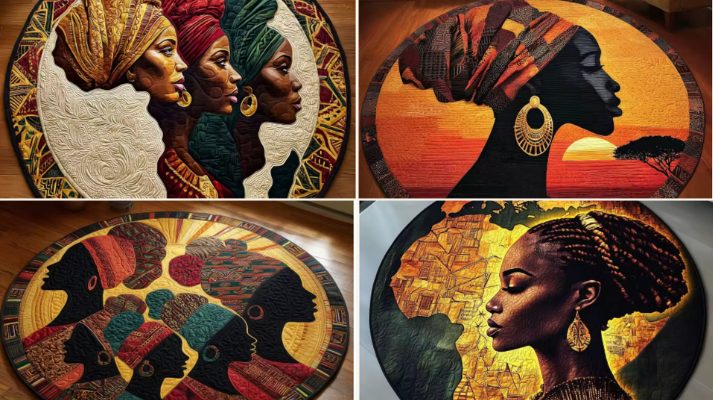
3. Round portrait statement rug
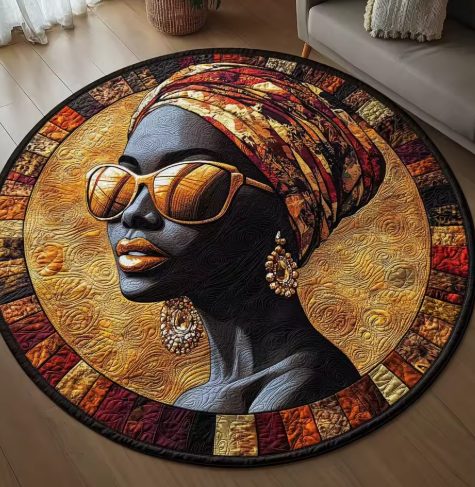
This is the “wow” piece. A round rug with a bold portrait in gold, rust and patchwork tones instantly becomes the focal point of the room. The circular shape also softens all the straight lines of a sofa and coffee table.
Styling tip: use it as an accent rug in a reading corner or in front of an armchair, rather than under a heavy coffee table, so the portrait stays visible.
4. African woman sculpture with a gold leaf tray
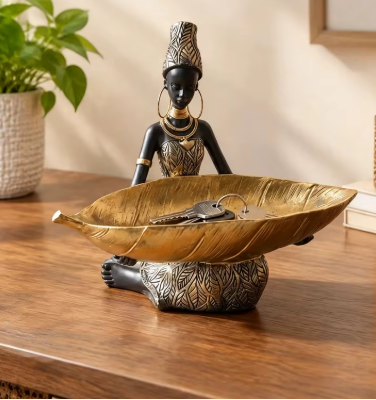
Every Afrohemian room needs one sculptural piece, and this one is both beautiful and useful. The black-and-gold figure holds a large leaf-shaped tray, perfect for keys, candles or a little bowl of dried flowers on a console or coffee table.
Styling tip: give it some breathing room. Place it alone on a console with one stack of books and a plant, and let it be the star.
5. Kilim-pattern fringed tablecloth
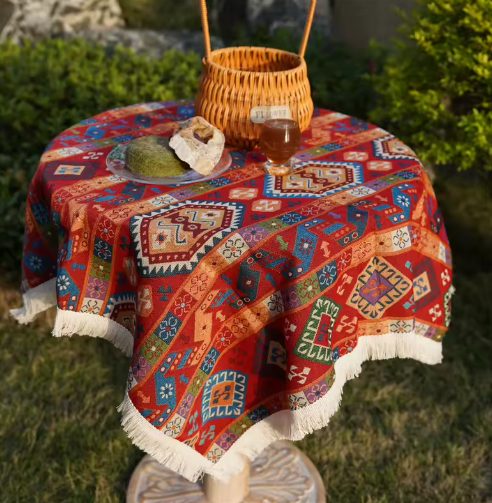
Here’s my favorite budget trick: textiles don’t have to stay where the label says. This red kilim-style tablecloth with a cream fringe works on a dining table, but it’s just as gorgeous draped over a round side table, a bench or the back of a sofa as a throw.
Styling tip: pair it with a woven basket or a rattan piece. The red pattern plus natural fiber is the Afrohemian look in one corner.
Good to know: prices on AliExpress change often and there are frequent sales, so check the current price and the size before you order. Delivery to the US can take a couple of weeks, so plan ahead if you’re decorating for a specific date. Before you order, read my guide to reading AliExpress listings.
Here’s how AI helped me put it all together
Before buying anything, I wanted to see whether these five pieces would actually work together in one room. So I asked AI to design a living room using exactly these items, and honestly, the result blew me away:
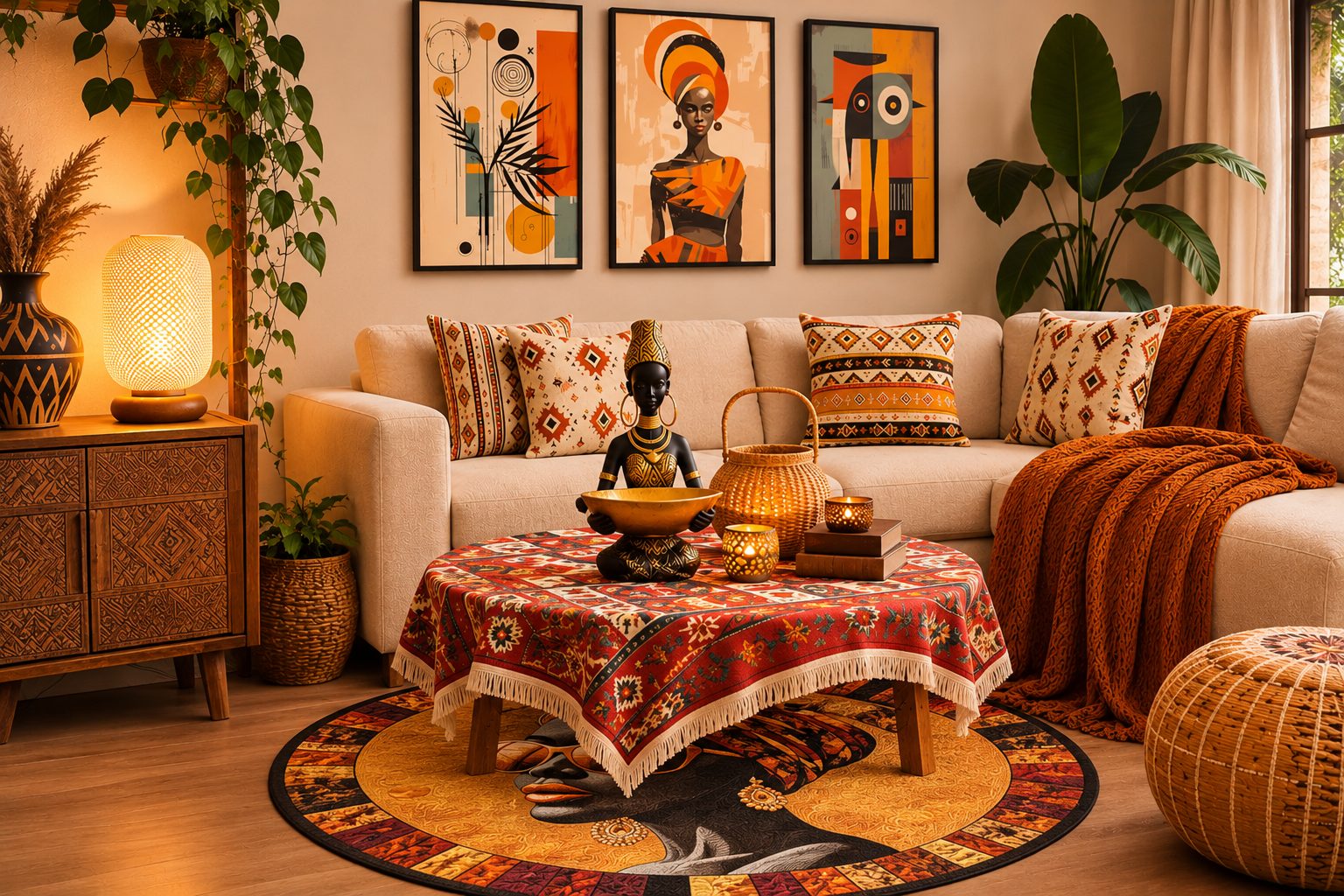
A neutral sofa, the pillows layered on top, the prints above, the round rug as an accent, the sculpture on the console and the tablecloth draped over a side table. Five pieces, one completely new mood.
Just so you know: the room above is an AI-generated concept, not a photo of a real space. I use it as a visual plan. The products themselves are real and linked above.
3 mistakes to avoid
- Too many patterns in the same size. Mix one large pattern, one medium and one small so the eye has somewhere to rest.
- Forgetting natural texture. Without wood, rattan or woven pieces, the room can start to feel like a print shop rather than a home.
- Treating culture like a costume. Choose pieces you genuinely love, learn a little about where the patterns come from, and add authentic artisan-made pieces over time.
FAQ
What colors are used in Afrohemian decor?
Warm earth tones like terracotta, rust, ochre, mustard and brown, balanced with cream, plus accents of indigo or deep teal.
Is Afrohemian the same as boho?
Not quite. Boho is the relaxed, collected base. Afrohemian adds African textiles, patterns, art and sculpture on top, so it’s usually bolder and more graphic than classic neutral boho.
Can I do this style in a small apartment?
Absolutely. Start with pillows and one piece of wall art. In a small room, two or three strong pieces are often more striking than ten small ones.
How much does an Afrohemian makeover cost?
It depends on where you start, but if you keep your existing furniture and change only the textiles, art and accents, you can transform the room for a fraction of the cost of new furniture.
Which piece would you add first? Tell me in the comments. I’d love to see your Afrohemian corners! 🧡
Sources
Pinterest Predicts 2026: Pinterest Newsroom
Bohemianism: Encyclopaedia Britannica
Bògòlanfini (mineral-dyed cloth): The Metropolitan Museum of Art
Wrapped Skirt from Mali: The George Washington University Museum and The Textile Museum
Àdìrẹ cloth: Victoria and Albert Museum
This post contains affiliate links. If you buy through them, I may earn a small commission at no extra cost to you.